Education & Learning

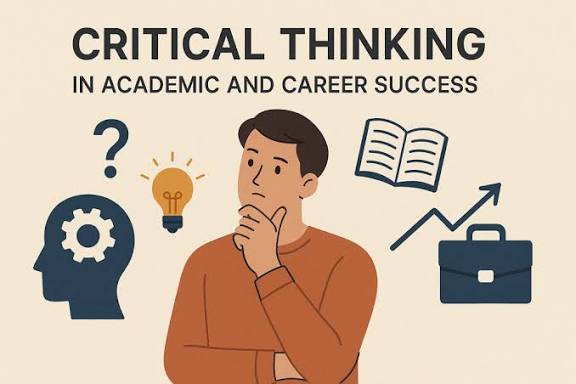
Critical Thinking As One Of The Umbrella For Youth Development.

Critical thinking has become a foundational skill for youth development in an era shaped by rapid technological change, global interdependence, and constant information flow. Developing young people today requires more than academic instruction. It requires equipping them with the ability to analyze information, question assumptions, evaluate evidence, and make informed decisions in complex and uncertain environments.

Critical thinking is widely understood as the capacity to reflect, analyze, interpret, and assess information in order to form reasoned judgments. This skill enables young people to move beyond surface understanding and engage more deeply with knowledge. Rather than accepting information at face value, critical thinkers ask meaningful questions, consider context, and examine multiple perspectives before reaching conclusions.

From a youth development standpoint, critical thinking strengthens problem-solving, decision-making, and analytical reasoning. These abilities support academic achievement, but they also prepare young people for real-life challenges such as navigating social pressures, civic responsibilities, and workplace demands. Youths who think critically are more capable of adapting to change and responding thoughtfully to unfamiliar situations.

UNESCO places strong emphasis on critical thinking as part of quality education and lifelong learning. Through its Education 2030 agenda and Global Citizenship Education framework, UNESCO highlights critical thinking as essential for empowering young people to become informed, responsible, and engaged members of society. According to UNESCO, education should not only transmit knowledge but also develop learners’ ability to question narratives, challenge misinformation, and contribute constructively to their communities.

In the digital age, this emphasis is especially relevant. Young people are exposed to vast amounts of online content, including misinformation, disinformation, and biased narratives. UNESCO promotes Media and Information Literacy as a key strategy for strengthening critical thinking among youths. Media and Information Literacy equips young people with skills to assess the credibility of sources, understand how information is produced, and recognize the social and ethical implications of media consumption. These competencies help youths become responsible digital citizens rather than passive consumers of information.

Critical thinking also supports UNESCO’s broader goals of peacebuilding, intercultural understanding, and sustainable development. When young people learn to think critically, they are better able to engage in respectful dialogue, appreciate cultural diversity, and address global challenges such as inequality, climate change, and social injustice. Critical thinking encourages empathy, ethical reflection, and collaborative problem-solving, which are essential for building inclusive and peaceful societies.

For youth development programs, integrating critical thinking means creating learning environments that encourage inquiry, discussion, and reflection. It involves giving young people opportunities to express ideas, analyze real-world issues, and learn from different viewpoints. Such approaches help youths develop confidence in their thinking and a sense of responsibility for their choices and actions.

Ultimately, critical thinking empowers young people to take an active role in shaping their own lives and the societies they belong to. By aligning youth development efforts with UNESCO’s vision, stakeholders can support the growth of a generation that is informed, resilient, and capable of contributing meaningfully to a rapidly changing world.

author-avatar

About Jude John Nwali

My name is Jude John Nwali, from Onicha Local Government Area of Ebonyi State, a Roman Catholic Catechist, Social Worker, An Advocate, Marriage Counselor, Events Manager, Catering Management, An Educator, Writer, Music Artiste, Social Standard Practitioner, Environmental Standard Practitioner, etc.

Leave a Reply

Your email address will not be published. Required fields are marked *